

 Tom Marshall
A heritage railway line which was made famous by the Railway Children film has won a national award for its visitor centre.
The Keighley and Worth Valley Railway (KWVR) received the Volunteers’ Award at the National Railway Heritage Awards ceremony on Wednesday.
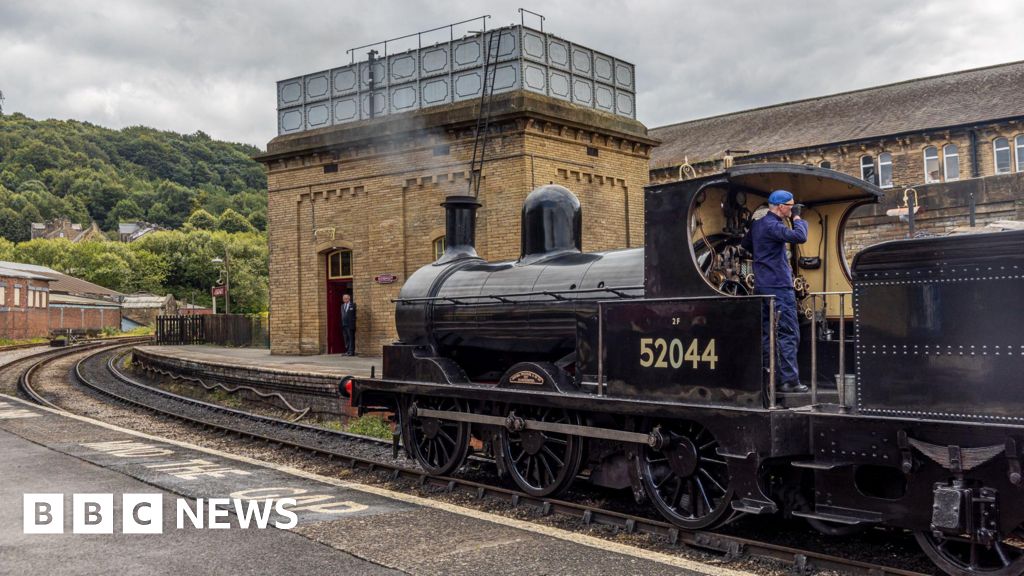
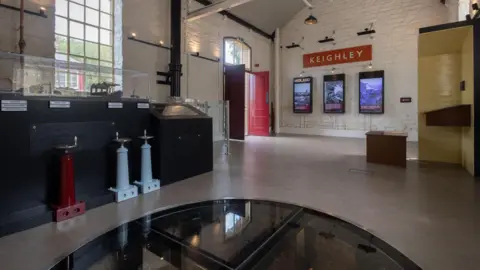
It was praised for the work done to transform the ground floor of the water tower, which still supplies water to steam locomotives at Keighley Station, into a modern visitor centre in 2024.
The centre features audio-visual displays, maps, models and other exhibits and the KWVR said the award was an acknowledgement of the hard work that had gone into creating it.
Noel Hartley, the railway’s business and operations manager, said it was a “nice accolade to have”.
“We are really pleased. It was certainly a long haul to get that building over the line and get it fixed up so it was lovely for our visitors to enjoy.”
He said it had been a real “team effort” to develop.
“The building is a water tank house and it was what was used to deliver water from the tank on the top by gravity down into steam locomotives,” Mr Hartley said.
It was originally constructed by the Midland Railway in 1883 and its 30-gallon tank on top still functions and supplies water to the locomotive using the heritage line.
“It’s a big stone building with this tank on top,” Mr Hartley said.
“We’ve interpreted that to show people the story of how steam locomotives were watered and how that technology was used for decades to power those locomotives up and down the country.”
 Tom Marshall
The centre is accessed directly from Platform Four and features exhibits detailing the history of the five-mile (8km) Worth Valley line from Keighley to Oxenhope.
The development was funded by £100,000 from the Keighley Towns Fund, with an additional £42,000 from The Railway Heritage Trust.
Judges for the National Railway Heritage Awards previously described the centre as a “highly commendable scheme” which had brought public access to a previously inaccessible structure.
Mr Hartley said KWVR was not one of the “biggest” heritage railways but they had a “really committed team”.
“Lots of people have that nostalgia about the railways and we see people still visiting us today with that nostalgia.
“Either when they remember steam trains running or remember visiting heritage railways as children and want to come back with their own.”