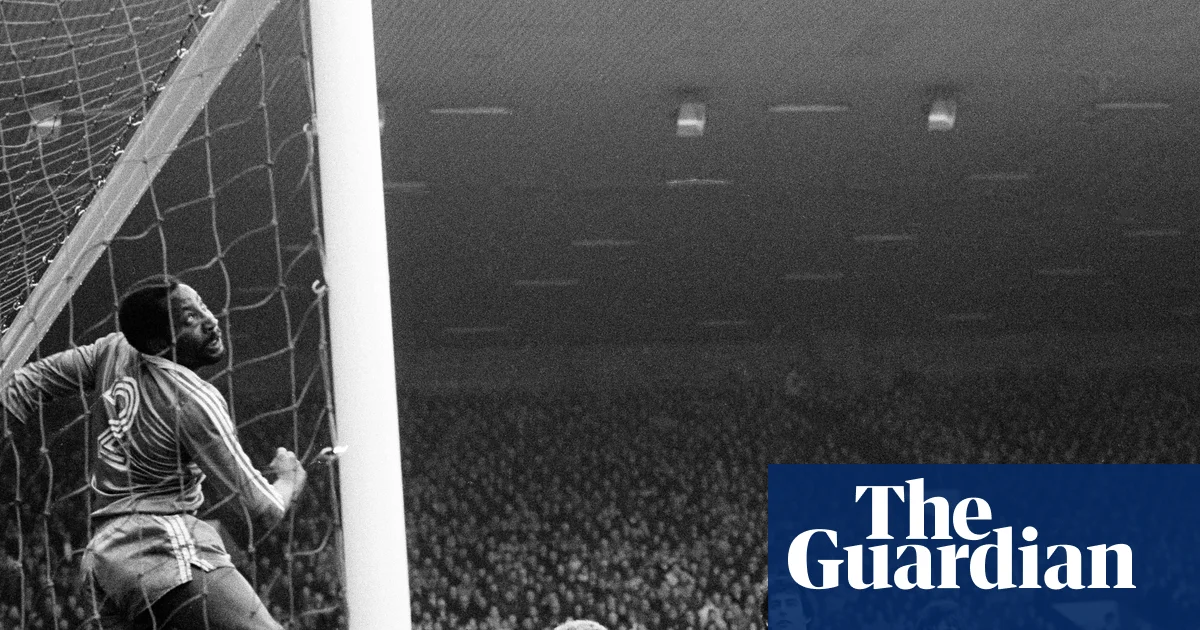

It was perceived by many as a bye. When the runaway league leaders Liverpool were drawn against rock-bottom Brighton at Anfield in the last 16 of the FA Cup in 1983, they were expected to take another step in their quest to win an unprecedented quadruple.
Brighton’s charismatic caretaker manager Jimmy Melia was trying his best to talk up his team’s hopes. “There is no way this draw means the end of the line,” the former Liverpool player protested. “We were the last side to win at Anfield, in March 1982.”
Not everyone shared his optimism. “The chances of lightning striking twice are hardly likely to dim Bob Paisley’s vision of his players handing over the trophy as a retirement present at Wembley in May,” wrote Patrick Barclay in the Guardian. Liverpool’s departing manager was expected to take another step towards the one trophy that had eluded him.
History was not on Brighton’s side. They had reached the FA Cup fifth round on four occasions but had never progressed any further. Even though they had hammered Manchester City 4-0 in the previous round, their league form hardly suggested an upset was on the cards. Brighton had not won a league match since December – Melia’s first game in charge after he had replaced Mike Bailey as manager – and that run would continue until March. At least the FA Cup provided a distraction, even if Brighton’s odds of 9/1 to win at Anfield emphasised the task before them.
More than 4,000 Brighton fans made the journey for the match at 2.30pm on Sunday 20 February. They travelled more in hope than expectation but, as the first half progressed, it became clear that Melia’s promise that his team would attack was not all hot air.
The 44,868 fans inside Anfield were stunned in the 32nd minute. Brighton forward Michael Robinson surged down Liverpool’s left flank and drove into the penalty area, drawing out Bruce Grobbelaar, before cutting back to Gerry Ryan, who scored in front of the Kop. Robinson nearly missed the game entirely – he had been given a one-match ban for head-butting the Watford player Steve Sherwood but, fortunately for Brighton, the ban started the day after the Liverpool match. The future Liverpool player certainly made the most of his opportunity. He also hit the crossbar with a header in the second half and the side-netting with another header from a narrow angle.
When Craig Johnston flicked a volley past Perry Digweed in the 67th minute to equalise for Liverpool, it looked as if normal service had resumed. But Brighton hit back immediately through a player familiar to many Liverpudlians. Tough-tackling midfielder Jimmy Case – who had spent eight years at Liverpool, winning four league titles and three European Cups – gave Brighton a 2-1 lead a minute after Johnston had scored.
Case’s volley from 20 yards out was well struck but a deflection off Ronnie Whelan gave Grobbelaar no chance. Case, his teammates and the travelling fans celebrated wildly, the matchwinner ecstatic in the days when it was rightfully seen as acceptable to mark a goal against a former club.
Brighton were 20 minutes away from a famous win but Liverpool were not going down without a fight. When the referee pointed to the spot, adjudging that Tony Grealish had fouled Kennedy, the Brighton fans must have been featuring the worst. But this would be Brighton’s afternoon. Neal dragged his effort wide – justice done in the eyes of Grealish, who had been booked for his appeals against the penalty. Liverpool laid siege to Brighton’s goal – Kenny Dalglish lofted over from six yards, Chris Ramsey headed a Mark Lawrenson effort off the line, and Whelan had a shot blocked – but the hosts could not score.
When the final whistle sounded, Melia and his players made their way to the swaying mass of Brighton fans in the corner of the stadium to celebrate their shock 2-1 win. Possibly drunk with delight, Melia then tried to drag his players towards the Kop to applaud the home fans. He soon realised his players were not too keen to join him.
“It was one of the greatest performances – perhaps the greatest – in their history,” Barclay noted in his match report. Melia was jubilant, joking after the match: “I think Liverpool will win three trophies this season, but not the FA Cup. I said we would play attacking football and we did just that. It was great for Jimmy Case to score the winning goal. I always knew we had a chance.”
“I said it would be a dream if I got the winner,” Case said. “The dream has come true. We knew we would be under a lot of pressure. We had a little bit of luck and it was great to score my goal just after they had equalised.”
Paisley cut a frustrated figure, with his last chance of winning the FA Cup now gone. “It was just one of those games,” he said. “It was all helter-skelter: not too much football. There was no way we were going to win. I never liked playing on Sunday.” Despite his disappointment, Paisley wished the winners well. “I hope Brighton go on to win the Cup.”
“We don’t care who we get in the quarter-finals so long as we are at home,” Melia said. His wish was granted and Brighton beat Norwich at the Goldstone Ground to book a place in the last four. They won a memorable semi-final against Sheffield Wednesday at Highbury to set up a date with Manchester United at Wembley. Brighton nearly won the match – “and Smith must score” – but had to settle for a 2-2 draw and a replay. In the end it was too much for them, with United easing to a 4-0 victory.
Their season was a topsy-turvy affair. Just six days after they had beaten Liverpool at Anfield, Brighton lost at home to Stoke in the league. There in a nutshell was the issue. They were able to raise themselves for the big cup games, but Melia and his players simply could not transfer these performances into their league displays. They finished bottom of the league, were relegated and Melia was sacked later in the year. The 1982-83 season did not end well for Brighton but the cup run, and that win at Anfield in particular, was a joyous experience.
This article is by Steven Pye for That 1980s Sports Blog