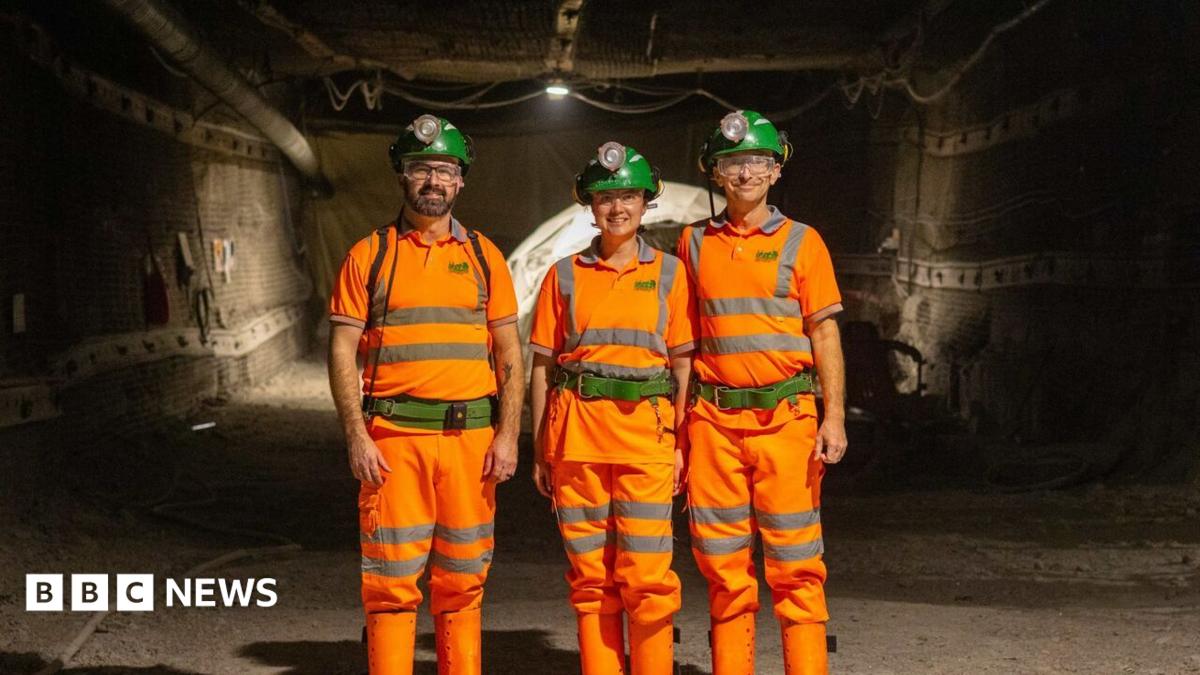

The world’s deepest vertical farm has been launched as a way of growing sustainable food without high energy bills.
The University of Sheffield said the “pioneering research” farm was 0.7 miles (1.1km) underground in a North Yorkshire mine and could transform agriculture.
Crops, including lettuce and pak choi, have been planted in the working mine in upright growing light beds.
The university said if successful, it could mean “thousands” more disused mines could be repurposed to grow affordable food.
According to the university, the collaboration with socially conscious food producer Farm Urban means information could be gathered to see if the new growing methods could be commercially viable in future, using the first “real-world evidence” of underground farming.
“We’re currently growing and, later this week, harvesting salad crops,” said project co-lead Jacob Nickles.
“In the next trial we’ll aim for either higher value halophytic (salt tolerant) crops, or a mix.
“We’re currently discussing samphire, sea fennel, quinoa, rocket, basil, mustard and possibly a tomato variety.”
Root vegetables like carrots and potatoes cannot be grown however because the system is designed for hydroponics and does not suit the morphology of such plants.
Nickles said there would also be challenges due to the ambient salt or heat from mining activities, but said that the year-long study would lead to understanding similar opportunities at other sites.
Many UK mines, he said, are “in economically deprived areas” so repurposing them could create skilled jobs as well as improving access to fresh produce and supporting local communities “while breathing new life into heritage sites”.