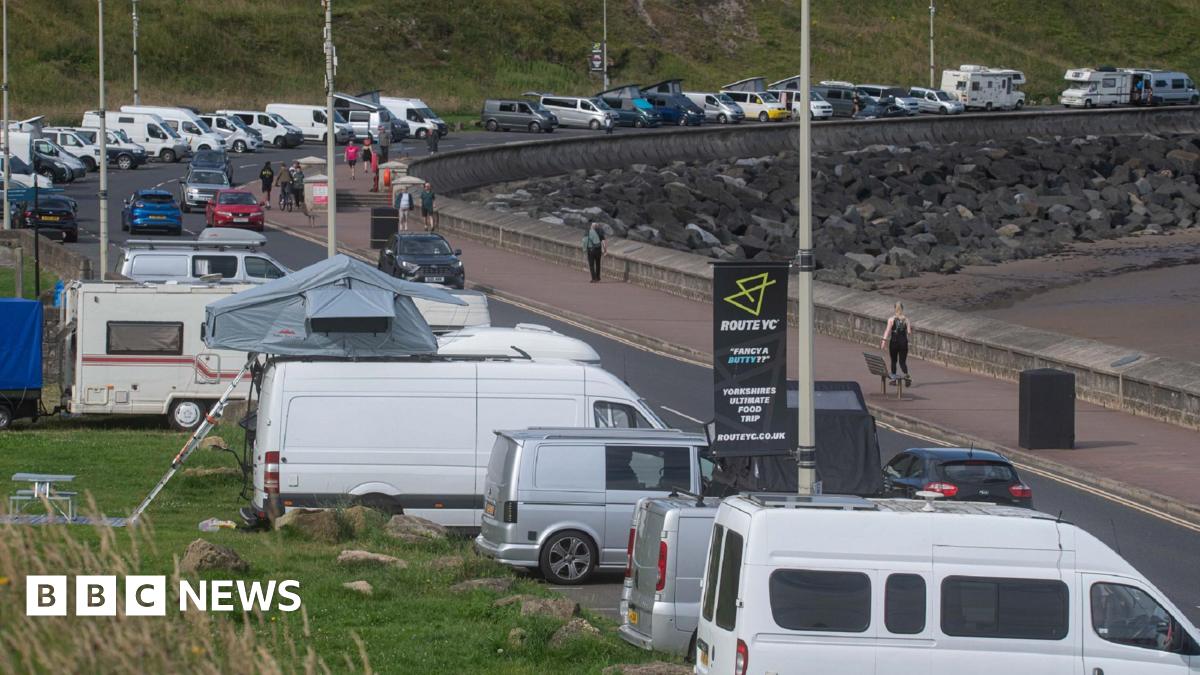

The new order bans all motor caravans from parking on those roads overnight throughout the year, with a public consultation on the scheme running until February 2027.
Maw, who represents the Weaponness and Ramshill division on the council, said the authority had been “forced to act to protect residents from the behaviour of some campervan owners”.
He said, when the original ban was introduced under an Experimental Traffic Regulation Order (ETRO), that simply moving motorhomes from one location could push the problem into residential areas.
He argued that an “aire-style” scheme, which provides designated overnight parking for motorhomes, should have been considered instead.
The original ETRO was introduced after the council said the number of motorhomes staying in some coastal locations had reached an “unacceptable level” and followed increasing complaints from residents and visitors.
A separate trial at Cayton Bay was later abandoned after signs were repeatedly vandalised and thrown from a cliff.
Earlier this year, the council’s executive member for highways and transport, Malcolm Taylor, said authorities needed to strike a balance between supporting tourism and addressing concerns from local communities.
Residents living on the newly restricted streets who own a motor caravan can apply to register their vehicle with the council, allowing it to be exempt from the ban.
Responses to the consultation must be made in writing and received before the consultation closes on 22 February 2027.