
Adam Kennedy is now on a mission to help others in the grip of ketamine addiction

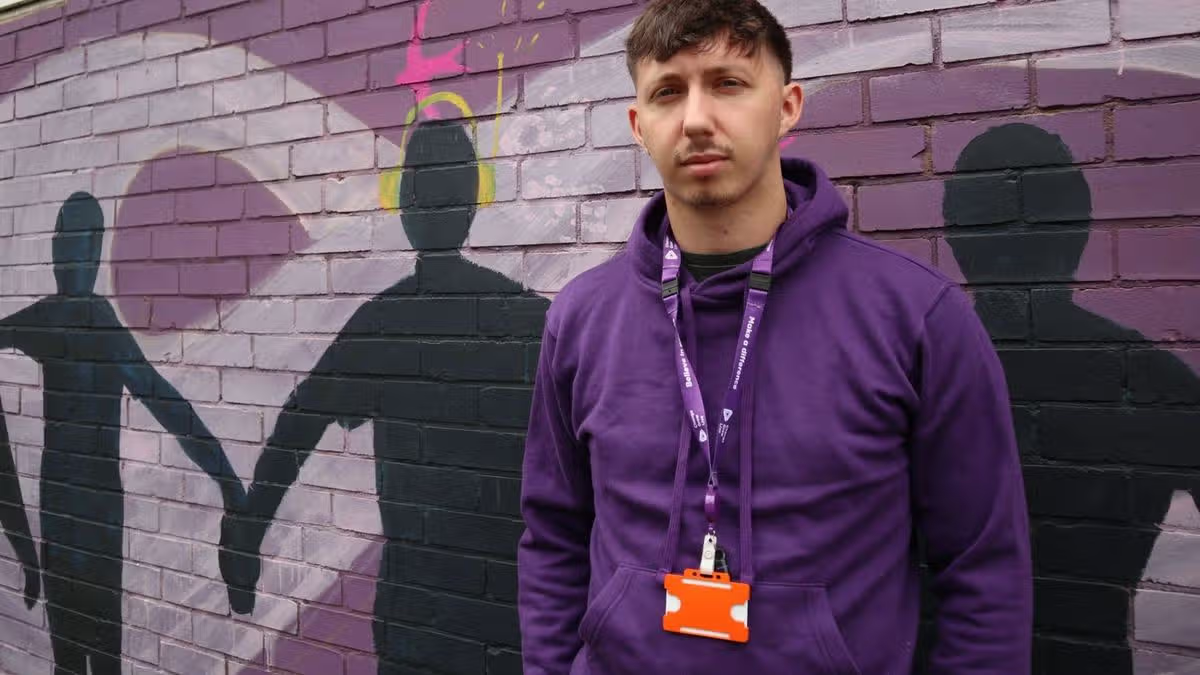
Adam Kennedy has talked of the toll ketamine use took on his physical and mental health.(Image: ReNew Hull)
Adam Kennedy was just 19 years-old when he first dabbled with ketamine at weekends with mates. Initially the drug gave him everything he wanted – it took away his thoughts, put him in a disassociated state and was drastically cheaper than the cocaine he had been spending hundreds of pounds on.
But within a year he was going to the toilet so much that he had to seek medical help. And his physical health was just one part of his life that began falling apart.
“I was using cocaine every weekend from Friday until Sunday – spending anywhere upwards of £200 minimum,” said Adam, now 26. “Then I found ketamine and I could spend £20 in a weekend. And I’d wake up the next day feeling fine. I could go out and do what I wanted.
“I got everything that I needed from ketamine in the sense that it took my thoughts away. Progressively, because I like the feeling – it gave me that ‘out’ – I just kept taking more and more.”
Staff at the fast food restaurant he managed had begun to notice his frequent trips to the toilet but other than that, there were few signs of the problems that would go on to wreak havoc for Adam. His tolerance to the drug became so great he was quickly taking a large amount every day.
Adam, who is now a ketamine recovery worker, explained: “Looking back – the thing that shocked me the most is how quickly I became really, really dependent on using it. I started using in 2019 and I looked back through my NHS records and saw my first urology appointment was 2020.
“That’s only a year before I needed medical assistance. And I kept on using for years after that.”
Hiding away in his room while not at work, Adam’s ketamine use was spiralling and isolating him from friends and family who wanted him to get help. And it stopped him from developing relationships with potential partners: “I’d always choose the drug over them and never give them any time,” Adam confessed.
The toll was enormous, he explained: “I would say to myself, “oh, if I don’t wake up tomorrow then maybe it’d be better than living. It got so serious that I’d have taken death over the life I was living.”
When colleagues at work began asking about his toilet use, Adam told them he simply had “bladder problems” which belied the sinister reasons behind the behaviour. Chronic ketamine use effects the lining of the bladder – sending users scrambling for the nearest convenience.
It is one of the tell tale signs that Adam, and his new colleagues at drug and alcohol support service ReNew Hull, want to make sure people spot either in themselves or in friends and loved ones. The launch of the new Hull Ketamine Pathway brings together services for a more coordinated response to people experiencing problems with ketamine.
“Everything in my life got affected,” said Adam, who shares his experiences in a new documentary film called K-Hole. “I stopped using in July 2024 and I haven’t looked back since. Rehab is the best thing I’ve ever done. It gave me free rein to be who I wanted to be instead of this person who was shrouded under a cloak.”
With the new pathway, Adam hopes to reach other young people in the grip of ketamine addiction, and those around them. Or it could be a clinician that recognises the warning signs and helps the user get a referral.
Adam added: “For those people using in their room, with an addiction, they’ll tell you it’s not a problem when it really is. They’re quite happy to keep using. It’s for those people and the people around them to realise the problem and know that there is a way out.”