
Doncaster is the 28th most-deprived local authority area of the 151 in England.
Hannah Popple, the local NHS primary care network manager, says: “Women have really low healthy life expectancy here, so they’re still living long but they are living to a poorer quality.”
The 12-week course, which launched earlier this year, also includes sessions on nutrition and exercise.
A new group will soon start up in Carcroft, and sessions in Bentley and Askern will begin next year. All are former mining communities.
The women taking part were referred by their GPs. Popple adds: “We identified a group of ladies who might be at risk of future issues such as a heart attack or a stroke, so they might be slightly overweight, they might be smokers, they might have a family history.
“This programme will hopefully help to reduce the risk of that happening in the future and therefore reduce the strain on the NHS.
“This is all about prevention. We want to try and educate them now to prevent those things happening in 10-15 years.”
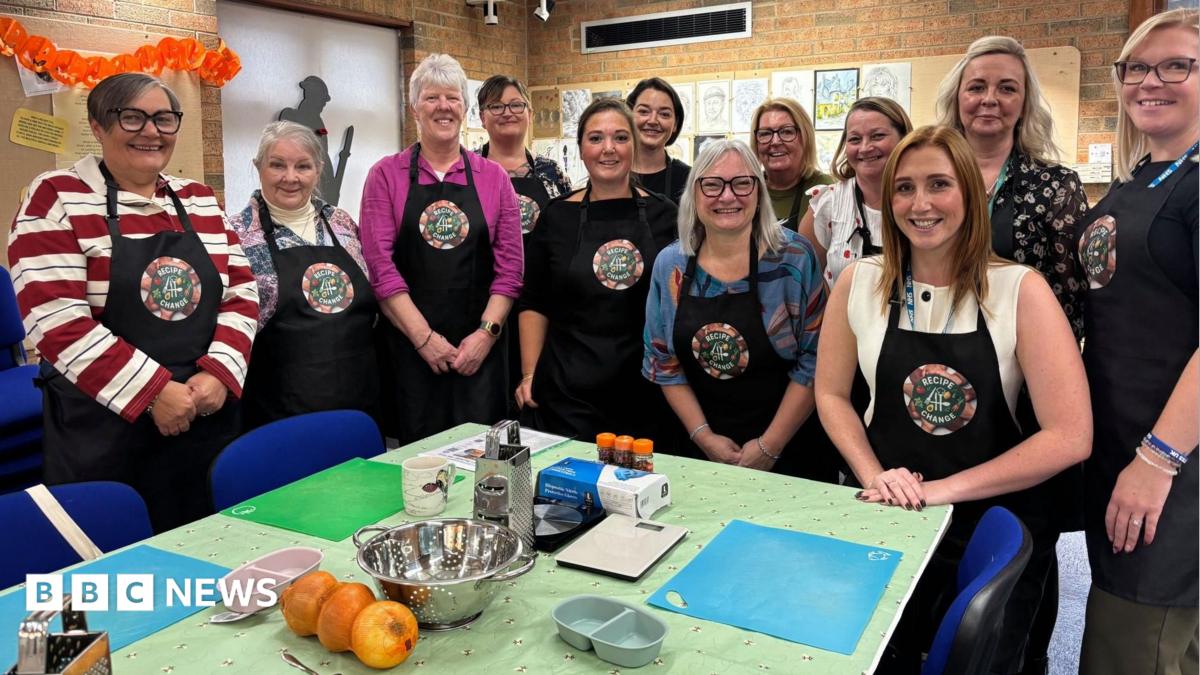
Leading the sessions is Amy Gallagher, whose Community Interest Company (CIC), Recipe 4 Change, won the contract to deliver them.
Her ethos is to teach people of all ages how to cook cheap and healthy meals and she says working with her class of women has been rewarding.
Gallagher talks through the ingredients in the coconut and red lentil fish curry.
“We’re not going to be using salt in this recipe. We’ve got reduced fat coconut milk, as opposed to the high fatty ones.
“Everyone’s struggling at the minute financially, so I’ve gone for affordable fish. This is about £3, it’s frozen. I’m then going to demonstrate that you can use frozen green beans too.”
Gallagher provides constant tips about cooking and even chopping techniques, and gives advice about bulk meal preparation and freezing leftovers.
Amanda Mikaoauskas, 51, was referred after struggling to exercise following foot surgery. She has rheumatoid arthritis and is a carer for her husband and her mother.
“It gets me out of the house, which is so important.
“My disease stops me from doing certain things but I know I should be doing more exercise.”
She was taken aback to be chosen for the course, but now makes healthier food choices.
“I don’t use salt in anything now. I’ve been using a lot more spices.
“I never had a fruit bowl, I now have one that is full every week, and I’ve started eating nuts and seeds.”