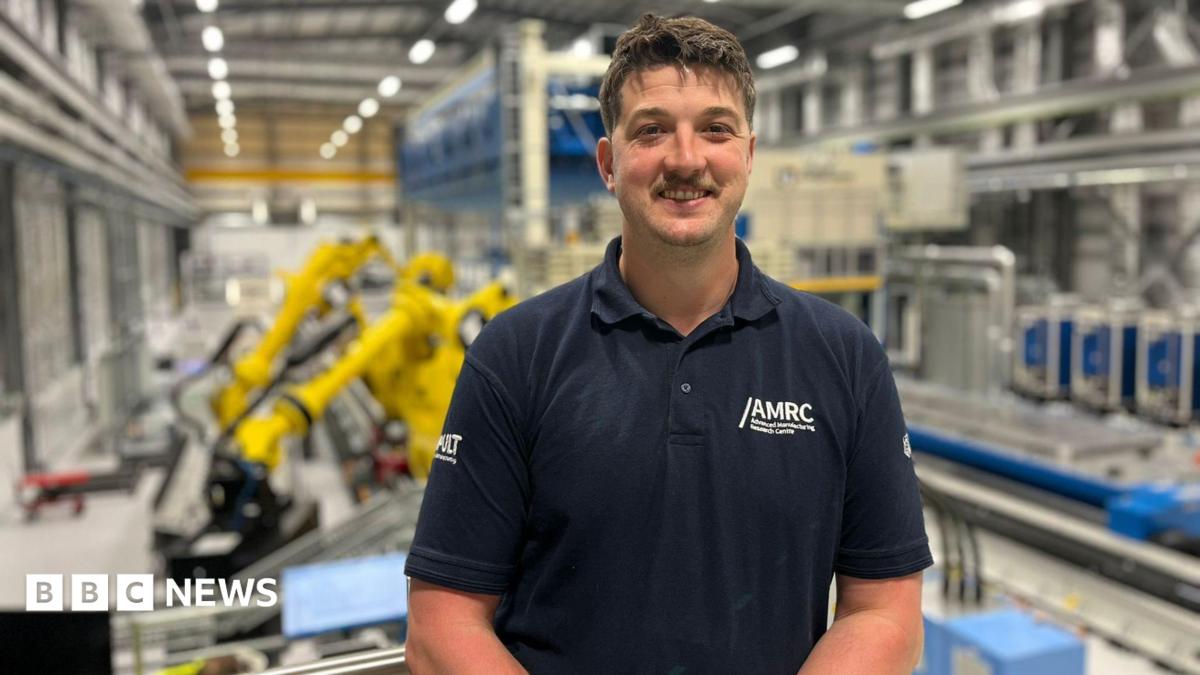

Prof Rab Scott was one of the first people based at the AMRC, and went on to become the centre’s director of industrial digitalisation before retiring in 2025.
“I was one of the original eight people, when we started here in 2001 we had no idea of what this would become,” he says.
“I remember sitting in our very first building in 2004, just seeing the old 100-tonne tipper trucks going backwards and forwards, getting filled with the spoil from the old open cast site where we now see 2,000 houses.
“The vision was to put South Yorkshire back on the map for industry, metallurgy and machining, back where it came from.
“The mining villages are benefiting from the effects of the advanced manufacturing park, it’s not just about people getting parachuted into the AMRC and then going home to somewhere else at the end of the working day.”
The Northern Powerhouse Partnership says the part of Rotherham where most of the industrial park is based saw a tripling in the value of goods and services generated in the area between 2004 and 2023.
Meanwhile, Oxford Economics say the increase in Rotherham’s manufacturing growth as a whole has been better than the UK average.
Anthony Breach, director of policy and research at Centre for Cities, said deindustrialisation hit places like South Yorkshire hard, as it relied on industrial jobs for its economic success, but that the AMRC had worked to find new outlets for those skills.
“We are seeing, like in the AMRC, there is still this kernel of highly skilled, highly specialised manufacturing expertise,” he said.
“It’s a highly productive, successful hotspot of manufacturing activity but it can’t replace all of the employment that was in manufacturing and mining in the past.
“It’s one arrow in the quiver of the local economy that has to be paired with other interventions such as transport to make the whole city region an attractive place.”