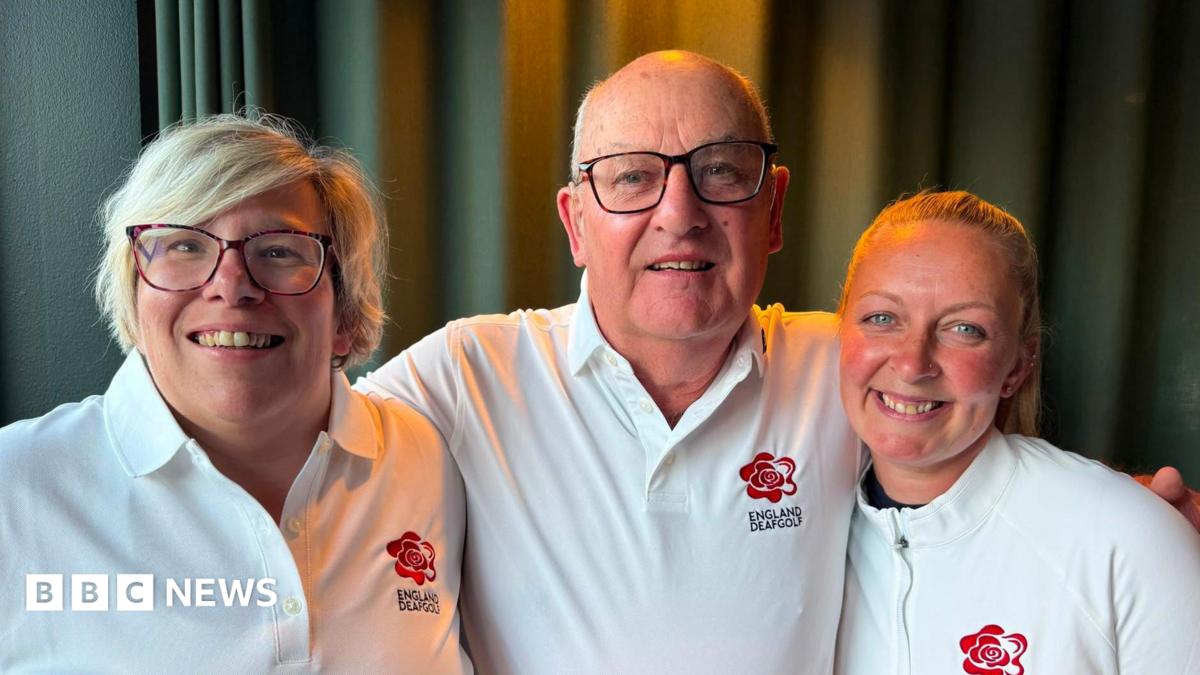

Meanwhile, Charlotte Dixon, from Leeds, said it would be her first time competing at the event.
The 43-year-old has over three decades of golfing experience to her name, starting as a junior at Sand Moor Golf Club, where she remains a member to this day.
Robinson and Serridge-Cross have also played for both deaf and hearing clubs over the years, with Robinson frequently playing for Normanton Golf Club’s team.
Dixon said she was introduced to deaf golf last year after she attended the Open Championship at Moor Allerton.
She said she was “really excited” to represent England and praised the community built around the sport.
“It can be daunting to join in with deaf sport, particularly if you’re used to being in a hearing world,” she added.
“I think it’s wonderful that we can all find a way to communicate in deaf golf.”
People with hearing loss communicate in many different ways, including speech, sign language and lip reading, or with the aid of cochlear implants or a combination of methods.
Sign languages also differ between countries, but Robinson said he was confident it would not be a barrier in Sweden.
“Obviously sign language will be a little bit different, but we can cope,” he said.
Jamie Chivers, outreach officer for England Deaf Golf, said the world championships represented “the pinnacle of stand-alone international deaf golf”.
“We travel to Sweden confident our players can compete with the very best,” he said.
“These players are not simply representing England in Sweden. They are also helping to change perceptions of what deaf athletes can achieve.”
Chivers said he hoped the team would inspire the next generation of deaf golfers, and would “encourage clubs across the country to become even more welcoming, accessible and inclusive”.